Friday, April 23, 2021

Policing--a Modest Suggestion

 Saw a piece on police training in the US today, somewhere.  Apparently there are several problems: with 18,000 organizations there's no uniformity (and no national database to record bad cops); training in the US is a lot shorter than in Europe; the training they get doesn't cover some of the key issues.  Another problem is lack of money--the emphasis is getting bodies on the street.

All this leads me to this suggestion:

  • provide federal money to local police force
  • make the money available only to expand the training and cover some of the missing areas
  • record those who receive federally funded training in a database, and track their careers--do they do better than their peers/predecessors, etc. Publicize the results, presumably good, to pressure the organizations which don't take advantage of the money.

Thursday, April 22, 2021

Rural Broadband--in Vermont per Walt Jeffries

 Walt Jeffries at Sugar Mountain Farm has been a very quiet blogger for a good while, and it's been even longer since I blogged about him.  (I'm sure I did, but too lazy to check.) He and his family have pigs, plus other livestock, on a farm in Vermont. 

He ceased right after he had gotten the necessary inspections to butcher their hogs on the farm and sell the meat across state lines, as well as within Vermont.  Building the butcher shop had been a multi-year endeavor, chronicled in the blog. After that he may have had less material to use in the blog.  Don't know.  I also thought maybe his children might have had problems with his blogging as they grew to adulthood, which would explain his silence.

Anyhow, he's recently returned to blogging, at least a little. His latest post reports the approach of fiber optic cable to his farm. He might go with that way, as opposed to Musk's Starlink system.  He credits the USDA broadband effort.  That's interesting because he's basically a libertarian type, reluctantly dealing with the regulations needed to get his butcher shop and retail sales operation running.

Wednesday, April 21, 2021

On Chauvin--Changing the Parameters

 Mr. Chauvin was convicted yesterday.  I've not tried to follow the ins and outs, but based on what I've heard/read I've no problem with it.  Scott Johnson at Powerline says the prosecution case was stronger than his initial expectations, which is significant.

If I could, I'd like to gather people on both sides of the verdict and ask this question: if the parameters of the case could be changed, what change(s) would convince you to change your mind? By parameters I mean such things as the length of time Chauvin knelt on Floyd's neck, Floyd's actions, the prosecution witnesses, Floyd's health condition (Bob Somerby has a hypothetical there.)

While the exercise would be interesting, I don't know if it would be educational at all.  I don't think people make decisions that way, by considering parameters one at a time.  It's like buying a house; the final choice is more a gut feel than reasoned.

Tuesday, April 20, 2021

Things Changing Faster Than You Notice

 Calculated Risk reports: 

Currently, almost 61 million people in the U.S. labor force have a Bachelor's degree or higher. This is almost 44% of the labor force, up from 26.2% in 1992.

When my father graduated from U of Minnesota in 1912 he was one of about 2 percent of the people in the US with a bachelor's degree. 

Monday, April 19, 2021

Tax Reform

 Reading "The Man Who Ran Washington, the Life and Times of James A. Baker III"

On page 250 Baker, who's just moved from chief of staff to Reagan to be Secretary of Treasury is about to work on tax reform.  The authors describe the current situation in terms which sound familiar today: many big corporations not paying any taxes, effective tax rate low, multitude of loopholes etc. 

As they describe the eventual 1986 tax reform act, it almost sounds as if it's something Biden could buy.  Top rate 33 percent (using a surtax) with 35 percent on corporations.  Eventually passed comfortably with bipartisan support. 

Times have changed.

Saturday, April 17, 2021

The Return of Plain English Regulations

 Not sure what this tells me, except I'm old, as if the mirror doesn't remind me daily.

Back in my ASCS Directives Management days, my branch was responsible for processing ASCS and CCC regulations to the Office of Federal Regulations.  We had to ensure proper format, conformed (carbon) copies, official signatures, the correct set of documents (i.e., the regulation itself, the transmittal memo, and others). The regulation package would circulate among the offices in a special folder, with the routing sheet stapled to the front, ending up with the Administrator, ASCS or Executive VP, CCC as applicable.

Among the many goals of President Carter  were several aiming to improve the federal government (notably Senior Executive Service and the sunset law). Theoretically of similar importance was the "plain English" initiative.  Regulation writers got some classes in how to write, and agencies got instructions for their heads to certify that regulations were written in "plain English".  In reality, all that meant after the first few months was the addition of another document with multiple copies to be included in the regulation folder.  The document just read something like": "I certify the enclosed regulation is written in plain English".

I think the Reagan administration may have continued the requirement, at least for a whole, but it didn't last much longer than that.

But it's back!! Govtrack.us has an article with a title which tells us all: 

Providing Accountability Through Transparency Act would require 100-word plain English summaries of each new federal rule or regulation

 It's been introduced in both House and Senate, but no co-sponsors as yet.  Cynically I want to note that where Carter wanted the whole regulation to be in plain English, so far this effort is just to have a short summary in plain English, leaving the actual regulation to be inscrutable, or not, depending on the ability of the regulation writer and the environment in which she is working.

The Vaccination Race

 We used to follow the race among companies and nations to get the first covid-19 vaccine.  We've lost interest in that one as the world has gotten several vaccines of varying efficacy.

Then in the US we had the race among states to vaccinate their citizens. 

Remember when West Virginia jumped out to an early lead.  It seemed so unlikely, but turned out they had relied on their pharmacies and a reasonably centralized model.  But WV has faded.

Four days ago Politico noted that New Mexico was leading. Again they were using a centralized registry system.  Both WV and NM were working against some unfavorable demographics: older people in both, Hispanics in NM, etc.

For a while the Dakotas were right up there near the top, but I don't remember a news piece on that.

Today the Northeast seems on the verge of taking the lead, at least according to this. You can click on the column headings to sort.  Maine, New Hampshire, and Connecticut lead NM, with Vermont, Massachusetts, and Rhode Island filling out the top 7 states.

I know my cousin, a MA resident, has had problems with the way they've handled registration and vaccination.  Extrapolating that to the rest of New England with any additional facts to support my theories, I'm guessing that New England's general  advantages have enabled their recent gains, overcoming some early problems in organization. 

I'll be waiting to see how the states have done after the dust settles, and how their accomplishments compare to their work on other vaccines.

Friday, April 16, 2021

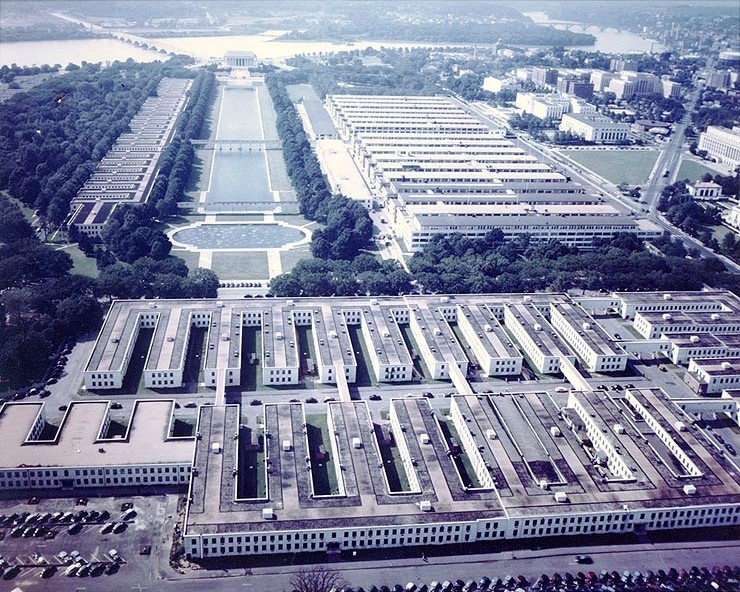
Washington's Mall in Wartime

 Doing some research for my cousin who lived outside DC during part of WWII.  

I remember the temporary WWI buildings along Constitution, now the site of Constitution gardens, but I didn't realize how fully the Mall, at least west of the Washington monument was built. (There's problems with accessing the website, but here's the url: http://www.columbia.edu/~fdc/family/dcmall.html )  I didn't realize part of the buildings were dormitories for workers.


[Updated for official photo.]


Thursday, April 15, 2021

I'm Not Surprised: Trump Disorganized with Transcripts

 There was a memoir written by a stenographer who worked recording and transcribing events in the Obama White House. It was pretty good.  One thing I remember from it was the work needed so that everything was recorded. It was impressive.

When I read that Trump made a practice of tearing up the papers documenting his meetings I knew he wasn't good news for historians, even though he was worth a lot to journalists.  That's now confirmed by this report of the missing transcripts of 8 percent or more of Trump's speeches.  It's not a loss to the history of oratory and given his incessant repetition of his best hits probably not a big loss to history of his presidency, but it's a loss.

Damnit--presidents are supposed to follow the law.  And Republican presidents are supposed to be organized. 

Wednesday, April 14, 2021

The Decline of Mainline Religion--How McDonalds Killed God

 Rural Blog has a piece by a minister on the many reasons for the decline of religion in the U.S.  Ross Douthat has a piece on the same subject in the Times, focusing mostly on how the intelligentsia are divorced from religion.

Given my religious ancestors and my own atheism I'm interested.  I've watched from the outside as my sister was heavily involved with her Presbyterian church.  The other day I came across a newspaper report of a lecture my grandfather gave in 1902, describing his (and his wife) visit to Jerusalem.  The newspaper found this noteworthy, presumably because grandfather was prominent in the West Pittston-Wilkes Barre area, the subject was somewhat exotic, and the lecture drew a good audience. 

How often today, even before the decline of local city newspapers, did the media pay attention to clergy as authoritative figures?  It seems most media stories deal with political/cultural/religious controversies.  Back in 1902 churches/ministers filled a need for entertainment and instruction, a need 20 years later to be filled by radio, 45 years later by television, and today by the internet.  

I grew up before McDonalds had spread to New York, so church suppers were an occasion. But church suppers can't compete with McDonalds, nor can slide shows/travelogues which I remember compete with TV.